
Soy lecithin
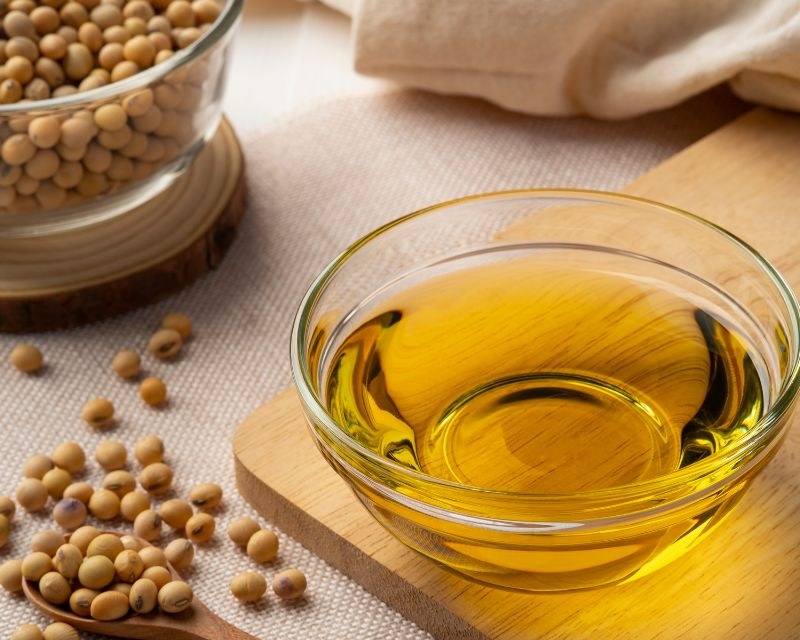
Soy lecithin is an ingredient derived from soybeans, widely used across the food, cosmetic, pharmaceutical, and animal feed industries. Characterized by a viscous, liquid consistency, a color ranging from yellow to dark brown, and a phospholipid content of 60% or higher (according to product specifications), soy lecithin is a sought-after ingredient for various specialized manufacturing processes.
Due to its ability to facilitate the emulsification and dispersion of ingredients, soy lecithin can be incorporated into a wide range of product formulations, tailored to the technical requirements and quality standards of specific industries.
1. Product Information: Soy Lecithin
- Product Name: Soy Lecithin.
- Physical State: Viscous liquid.
- Color: Ranges from yellow to dark brown.
- Odor: Characteristic of the product; free from off-odors.
- Phospholipid Content: 60% or higher.
- Origin: Soybeans.
- Applications: Ingredient for the food, cosmetic, pharmaceutical, and animal feed industries.

2. Characteristics of soy lecithin
Phospholipid content of 60% or higher
According to product documentation, soy lecithin contains at least 60% phospholipids. Phospholipids are a group of compounds with surface-active properties, utilized in various formulations that require assistance in combining ingredients with differing characteristics.
The actual content should be verified by referring to the technical specifications or the certificate of analysis for each specific shipment.
Viscous liquid state, characteristic color
The product appears as a viscous liquid, with a color ranging from yellow to dark brown. These sensory characteristics can be used for a preliminary assessment of the raw material during receipt and storage.
Supports emulsification in manufacturing formulations
Soy lecithin is commonly used as an emulsifier or a dispersion aid in appropriate formulations. Its specific application depends on the composition, the dosage used, and the technical requirements of the final product.
3. Industrial applications of soy lecithin
Food industry
Soy lecithin is used in various food products to facilitate emulsification, assist in the dispersion of ingredients, and improve the uniformity of formulations. Its use must comply with regulations regarding food additives, raw materials, and food safety applicable to each specific product.
Cosmetics industry
In the production of cosmetics, lecithin can be incorporated into formulations that require assistance with emulsification or the dispersion of ingredients, depending on the properties of the raw materials and the requirements of the final product.
Pharmaceutical industry
Soy lecithin may be applied in certain pharmaceutical formulations or as an excipient, provided it meets the necessary quality, purity, and relevant industry-specific standards. Animal Feed Industry
In the animal feed sector, soy lecithin can be incorporated as an ingredient within appropriate feed formulations. The inclusion rate should be determined based on the characteristics of the other raw materials and the specific nutritional objectives for the final product.
4. Target Customer Segments
- Soy lecithin is intended for businesses that require emulsifiers and phospholipids in their production processes, including:
- Food processing plants.
- Cosmetic manufacturers.
- Pharmaceutical companies and manufacturers of pharmaceutical ingredients.
- Animal feed production facilities.
- Distributors and suppliers of industrial raw materials.
5. Storage and Usage Guidelines
To maintain the quality of soy lecithin, it should be stored in suitable, clean, and airtight containers or packaging. The product should be kept in a cool, dry place, away from direct sunlight and potential sources of contamination.
Before use in production, businesses should conduct sensory evaluations and verify the phospholipid content and other technical specifications required by their specific industry. Processes involving heating, dosing, and blending must adhere to the supplier’s technical guidelines and the requirements of the production formula.
6. Soy Lecithin – A Versatile Ingredient for Various Manufacturing Sectors
With its viscous, liquid form, distinct sensory characteristics, and a phospholipid content of 60% or higher (as specified in product documentation), soy lecithin is a valuable ingredient for businesses operating in the food, cosmetic, pharmaceutical, and animal feed industries.
Selecting raw materials with transparent technical specifications, implementing rigorous quality control for incoming supplies, and clearly defining the intended application will help businesses accurately assess the suitability of the product for their specific production processes.
| Nutrition | Rich in Vitamin E and containing Omega 3-6-9 fatty acids, it is also fortified with Vitamin A (Vitamin A Palmitate) to support cardiovascular health and vision. |
|---|---|
| Storage | Store in a cool, dry place, away from direct sunlight. |
| Note | Close the lid tightly after use; it is recommended to consume the product within 30 days of opening. |
| Standards | Meets the international quality standard ISO 22000:2018. |
Content is being updated.
Content is being updated.